Rockets, drones & missiles: Can Hezbollah sustain a full-scale war with Israel? Iran proxy’s deadly arsenal decoded
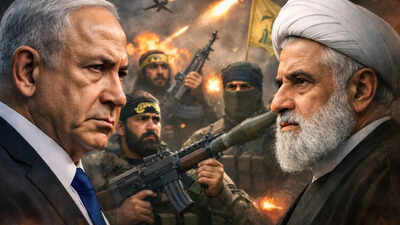
The uneasy calm along the Israel–Lebanon border is once again fraying. Expanded truce talks under United States supervision along the Blue Line have opened a narrow diplomatic window, but the ground reality remains tense and unpredictable. The two sides remain technically at war, and each round of engagement carries the risk of escalation.This phase of tension is closely linked to the wider regional confrontation involving Iran, Israel and the United States. The recent surge in hostilities following US–Israel actions tied to Iran has pulled Hezbollah back into active confrontation. The group’s re-entry into the conflict has challenged earlier assumptions that it had been significantly weakened by years of targeted strikes, leadership losses and economic strain.Instead, Hezbollah has shown that it remains operationally capable, strategically patient and able to adapt under pressure. This raises a fundamental question that now shapes the conflict. What is Lebanon’s real military leverage against Israel, and how strong is Hezbollah’s arsenal after years of sustained attrition?
Lebanon’s dual power structure
Lebanon’s security landscape is defined by a complex duality. The Lebanese Armed Forces serve as the official military institution of the state, but their role is largely defensive and constrained. Limited resources, internal political divisions and dependence on external support have shaped a force that is not designed for large-scale confrontation with Israel.
Alongside this official structure operates Hezbollah, a parallel military entity with its own command, intelligence network and logistical systems. Over decades, Hezbollah has evolved from a guerrilla organisation into a hybrid force that combines irregular warfare with elements of conventional military capability.Its relationship with Iran has been central to this transformation. Financial backing, training programmes and access to advanced weapon systems have enabled Hezbollah to build a sophisticated arsenal and maintain operational continuity. This has created a situation where Lebanon’s state institutions seek de-escalation, while Hezbollah retains both the capability and intent to engage Israel militarily.
Hezbollah after 2024: A force that adapted
The period following the 2024 ceasefire was marked by sustained Israeli efforts to degrade Hezbollah’s capabilities. Targeted strikes hit infrastructure, weapons depots and senior commanders. The disruption of supply routes through Syria and the loss of key leadership figures were seen as serious setbacks.For a time, Hezbollah’s reduced activity reinforced the perception that it had been weakened.
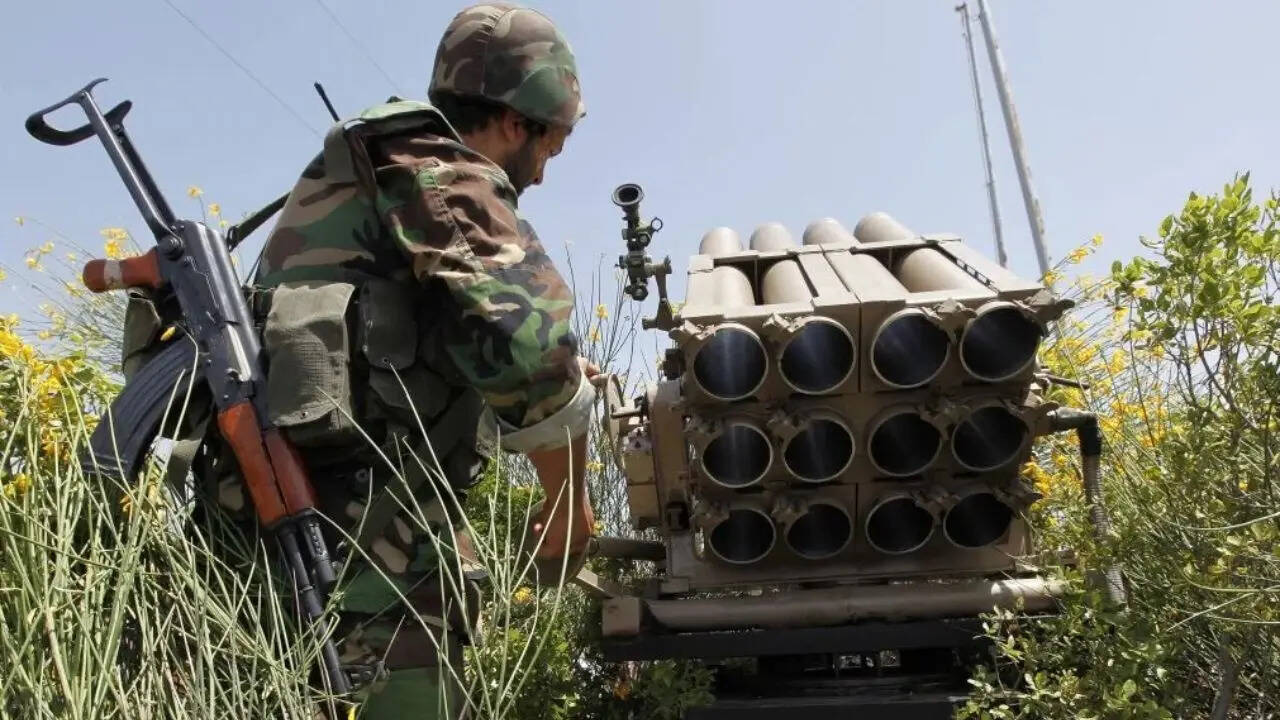
That perception has not held. As tensions rose again in the region, Hezbollah resumed active operations. Rocket fire into northern Israel increased, drone activity intensified and clashes along the border became more frequent. These developments suggest that Hezbollah used the ceasefire period not as a pause but as a phase of recalibration.
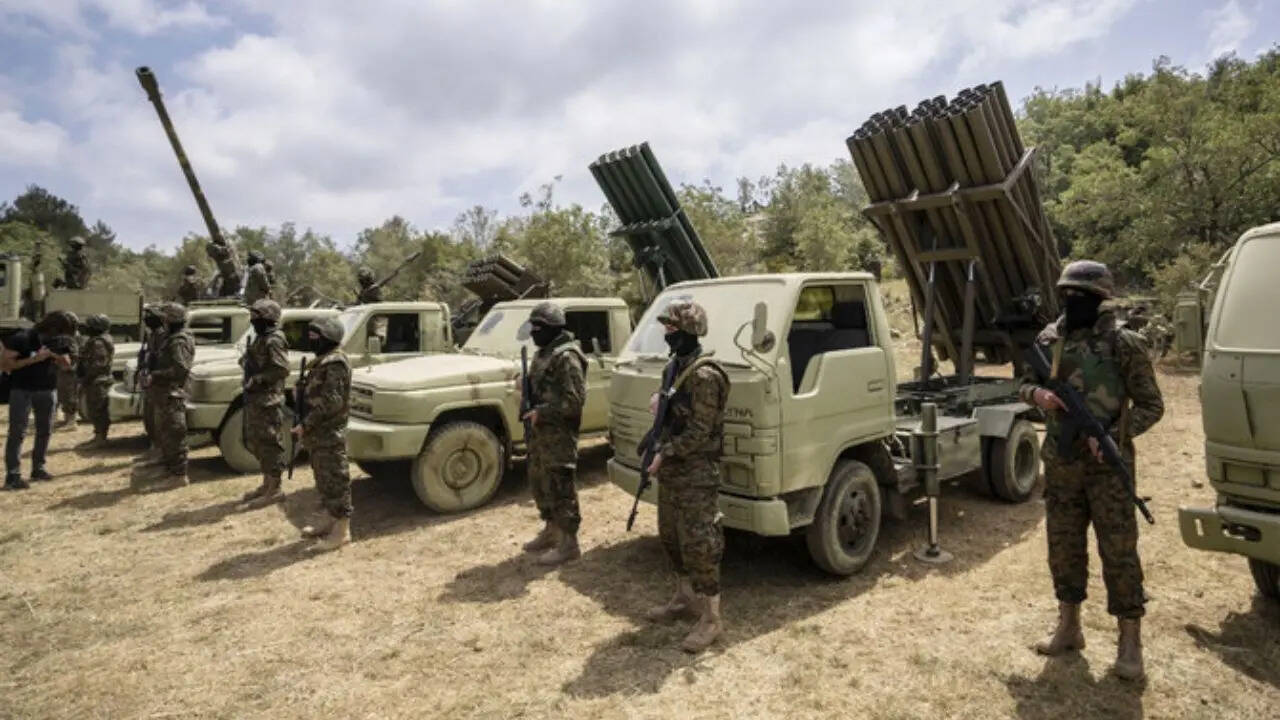
The group appears to have restructured its forces, decentralised command units and focused on resilience. Smaller operational cells, greater mobility and an emphasis on flexibility have allowed it to absorb losses while maintaining offensive capability.
Hezbollah’s small arms and infantry foundation
At the most basic level, Hezbollah’s military strength is anchored in its extensive inventory of small arms and infantry weapons. The backbone of this arsenal remains the AK-series rifles, including the AK-47, AKM and AK-74, which have been in consistent use since the 1980s. These weapons are widely preferred for their durability, ease of maintenance and effectiveness across varied terrain, making them ideal for prolonged irregular warfare.Alongside these Soviet-origin platforms, Hezbollah also deploys American-made rifles such as the M16 and M4. These are often used alongside AK variants, reflecting the group’s diverse procurement networks and operational flexibility. Older battle rifles like the FN FAL, once more prominent, still appear in limited use, highlighting an arsenal built over decades through multiple supply channels.For specialised roles, Hezbollah fields weapons such as the H&K MP5 submachine gun, typically used by elite units or in training environments. At the squad level, PK machine guns provide sustained suppressive fire, forming a key component of infantry operations.Sniper capabilities are supported by rifles like the Dragunov, which remains a standard platform for designated marksmen. The Steyr SSG 69 has also been part of the inventory, though it is gradually being phased out. There are occasional reports of heavier anti-materiel rifles such as the Barrett M82, though their presence remains unconfirmed.Heavy machine guns such as the DShK and KPV, along with the American M2 Browning, add another layer of firepower. These are often mounted on vehicles or fixed defensive positions and can be used in both ground combat and limited anti-air roles.Taken together, this broad mix of infantry weapons ensures that Hezbollah fighters remain well-equipped across a range of combat scenarios, with a depth of inventory that allows for sustained operations without significant shortages.
Anti-tank capability: Precision on the battlefield
One of Hezbollah’s most effective and defining military assets is its anti-tank arsenal, a capability that has been developed and refined over decades. Designed to counter armoured vehicles, fortified positions and troop concentrations, these systems play a central role in the group’s battlefield strategy.At the most basic level, Hezbollah relies on rocket-propelled grenades such as the RPG-7 and RPG-29, which provide short-range anti-armour capability. These weapons are widely used in urban and close-quarter combat, forming the backbone of frontline engagements.Beyond this, Hezbollah operates a diverse range of guided anti-tank missile systems that extend both range and precision. The AT-3 Sagger remains one of the most commonly used platforms, with a range of around three kilometres. This is supported by second-generation systems such as Konkurs and Metis-M, which offer improved guidance, greater accuracy and extended engagement ranges.Among the more advanced systems, the Kornet missile stands out as one of the most effective in Hezbollah’s inventory. Capable of striking targets up to ten kilometres away, it has demonstrated the ability to penetrate modern armour and is considered a major threat to Israeli armoured units.Additional systems such as the BGM-71 TOW and its Iranian counterpart, the Toophan, provide further medium-range capability. European-origin systems like the MILAN are also present, though less prominent in operational use. At the higher end of the spectrum, the Almas missile represents a newer generation of weaponry, featuring extended range and advanced targeting capabilities, including top-attack profiles that allow it to strike vehicles from above.Taken together, this layered anti-tank network enables Hezbollah to engage targets across multiple distances with increasing precision. It has proven particularly effective in defensive operations and ambush scenarios, where terrain and positioning can be used to maximise impact against armoured forces.
Rocket artillery: The backbone of deterrence
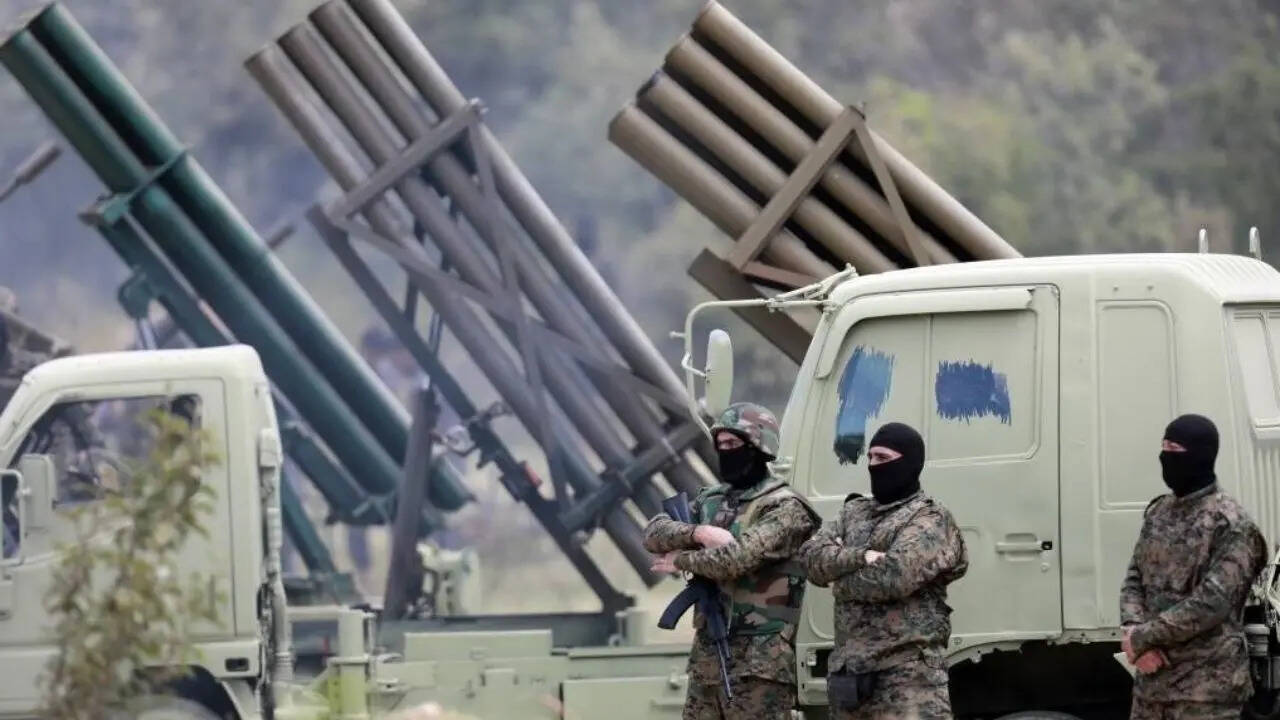
Hezbollah’s rocket arsenal forms the core of its deterrence strategy against Israel. Its strength lies not only in the diversity of systems but also in the sheer volume of rockets at its disposal, allowing it to sustain prolonged engagements and maintain constant pressure.Short-range rockets such as the Katyusha and BM-21 Grad are among the most widely used. With ranges between 20 and 40 kilometres and relatively modest warheads, these systems are designed for mass deployment against border areas. Their effectiveness comes from quantity rather than precision, enabling Hezbollah to overwhelm missile defence systems through saturation.Even shorter-range systems like the Fajr-1 and Type-63 operate within distances of up to 10 kilometres and are primarily used for tactical support. Heavier short-range rockets such as the Falaq-1 and Falaq-2 increase destructive potential with larger warheads, making them more effective against fortified positions and concentrated targets.Moving into medium-range capabilities, rockets such as the Fajr-3 and Fajr-5 extend Hezbollah’s reach deeper into Israeli territory. These systems can strike targets up to 75 kilometres away, while the Khaibar-1 further expands this range to around 100 kilometres, enabling the group to threaten major urban centres and strategic installations.At the long-range end, systems such as the Zelzal series and the Naze’at rockets allow Hezbollah to strike far beyond the immediate border region. With ranges extending from 100 to over 250 kilometres and significantly larger warheads, these weapons are designed for strategic impact rather than tactical use.A key advantage of Hezbollah’s rocket artillery lies in its mobility. Many of these systems are mounted on mobile launch platforms, allowing rapid firing followed by relocation. This reduces vulnerability to counterstrikes and makes detection more difficult.Combined with large stockpiles, this mobility and volume enable Hezbollah to sustain continuous rocket fire, reinforcing its ability to deter escalation while retaining the capacity to inflict widespread damage if conflict intensifies.
Precision missiles: Strategic reach and accuracy
While rockets provide volume, precision-guided missiles offer accuracy. Systems such as the Fateh-110 give Hezbollah the ability to strike targets hundreds of kilometres away with a high degree of precision.More advanced Iranian systems extend this reach even further, allowing for strikes across most of Israel. These missiles are designed to hit specific targets, including critical infrastructure such as airbases, energy facilities and command centres.Although fewer in number, these weapons carry significant strategic weight. Their ability to deliver precise strikes increases their effectiveness and raises the stakes of any escalation.
Air defence: A constrained capability
Hezbollah’s air defence systems are limited when compared to Israel’s advanced air force. Portable systems such as the SA-7, SA-14 and SA-16 provide some capability against low-flying aircraft and drones, with engagement ranges of a few kilometres.Additional systems like the QW-1 and Misagh-1 offer similar capabilities. Anti-aircraft guns such as the ZU-23-2 and self-propelled platforms like the ZSU-23-4 are also present, though they are often used in ground roles.Despite these assets, Hezbollah has been unable to significantly challenge Israeli air superiority. This remains one of its key vulnerabilities.
Drones and evolving warfare
Drone warfare has become an increasingly important component of Hezbollah’s operations. The group uses a range of unmanned systems for attack, surveillance and tactical support.Explosive drones are used for direct strikes, while reconnaissance drones provide intelligence. Bomb-dropping drones offer additional flexibility on the battlefield. Systems such as the Mersad and Ayoub, based on Iranian designs, extend operational range and capability.Many of these drones are assembled locally using imported parts. This makes them cost-effective and difficult to disrupt, allowing Hezbollah to maintain and expand its drone capabilities even under pressure.
Naval dimension and extended reach
Hezbollah’s capabilities are not limited to land and air domains. The group also possesses anti-ship missiles such as the Yakhont, which can target vessels at considerable distances. Coastal strike systems add to this capability, providing a limited but notable naval dimension.While not central to its overall strategy, these capabilities expand the scope of the conflict and add another layer to Hezbollah’s deterrence.
Local production and resilience
One of Hezbollah’s most significant adaptations has been its shift towards local production. With supply routes disrupted, the group has increasingly focused on assembling rockets, producing drones and upgrading existing systems within Lebanon.This decentralised approach enhances resilience. Even when facilities are targeted, production can continue elsewhere. It also reduces dependence on external supply chains, making it more difficult for adversaries to disrupt its capabilities.
Tactical evolution and battlefield adaptation
Hezbollah’s operational tactics have evolved alongside its arsenal. The group has moved away from large, centralised formations towards smaller, semi-autonomous units. These units operate with greater flexibility, allowing for rapid movement and reduced vulnerability.This approach combines elements of guerrilla warfare with modern military practices. It enables Hezbollah to conduct operations across multiple fronts and adapt quickly to changing conditions.
Numbers versus perception
Despite losses, Hezbollah’s arsenal remains substantial. It retains tens of thousands of rockets, a smaller but significant number of precision missiles, thousands of anti-tank systems and an expanding drone fleet.This combination provides the capacity to sustain conflict over extended periods. It also challenges the perception that the group has been decisively weakened.
Israel’s dilemma
For Israel, Hezbollah represents the most immediate and complex threat on its northern border. Years of targeted operations have not eliminated the group’s capabilities. Instead, Hezbollah has shown an ability to adapt and recover.This has led to debates within Israel about whether to pursue a broader military campaign. Such an approach could involve deeper incursions into southern Lebanon, but it carries significant risks, including regional escalation and high casualties.
Lebanon under pressure
Lebanon finds itself in a precarious position. While its leadership has signalled openness to negotiation, its limited control over Hezbollah complicates efforts to de-escalate tensions.At the same time, the economic and social strain of ongoing conflict weighs heavily on the population. Further escalation risks deepening an already fragile situation.
Deterrence and uncertainty
The current phase of the Israel–Lebanon conflict highlights a central reality. Hezbollah remains a resilient and adaptive force with a layered and evolving arsenal.Lebanon’s military leverage against Israel is shaped less by its formal armed forces and more by Hezbollah’s capabilities. This creates a balance that is both stabilising and volatile.As diplomatic efforts continue, this balance will remain fragile. Hezbollah’s arsenal acts as both a deterrent and a potential trigger. Whether it prevents wider conflict or contributes to escalation will depend on how the current tensions unfold in the months ahead.