FAFSA 2026-27: US Education Department reports higher satisfaction, record early launch and stronger fraud controls
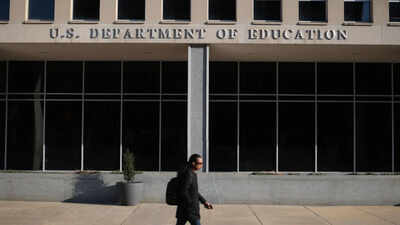
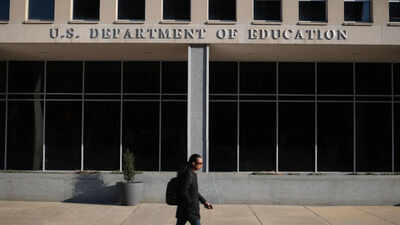
The U.S. Department of Education has reported major improvements in the rollout and performance of the 2026-27 Free Application for Federal Student Aid (FAFSA), citing higher student satisfaction rates, faster customer support response times and the earliest launch of the form on record.According to a report by K-12 Dive, department officials shared these updates during the legislative conference of the National Association of Student Financial Aid Administrators (NASFAA) this week.
8 million students submit forms; satisfaction improves
As reported by K-12 Dive, around 8 million students have already submitted the 2026-27 FAFSA form. The Education Department launched the form on September 24, roughly a week ahead of the statutory October 1 deadline. Officials described this as the earliest rollout in FAFSA history.FAFSA Program Executive Director Aaron Lemon-Strauss told conference attendees that the department has moved past the technical and operational setbacks that disrupted previous aid cycles. In 2023, the FAFSA form was released on December 30, nearly three months later than usual. The following year, it launched on November 21. Those delays created uncertainty for students, families and colleges nationwide.In response, lawmakers passed legislation requiring the FAFSA to be made available by October 1 each year. Lemon-Strauss acknowledged that the department “went through some rough patches” during the initial implementation of the redesigned form but said improvements are now visible in performance data.The current cycle shows a 96% satisfaction rate among users who completed the FAFSA and rated it at least four out of five stars. That marks an increase from 94% in the previous cycle. In addition, 92% of applicants said the form took a reasonable amount of time to complete.The updated FAFSA reflects changes made under the FAFSA Simplification Act, which reduced the number of required questions from more than 100 to several dozen. The legislation also expanded eligibility for federal Pell Grants.
Pell Grant expansion benefits 1.7 million more students
Citing data from the National College Attainment Network, K-12 Dive reported that 1.7 million more students were eligible for the maximum Pell Grant in the last cycle compared to the 2023-24 award year. The 2023-24 cycle was the final one before the simplification law took effect.Officials said the expanded eligibility is a key outcome of the new formula and streamlined process. The goal of the changes was to simplify the application experience while broadening access to federal student aid, particularly for low-income families.
Call center wait times drop sharply
The Education Department also highlighted improvements in customer service operations. Average wait times at the FAFSA call center were under one minute through January 30. This marks a significant turnaround from two cycles ago, when applicants reported long delays and unanswered calls.A 2024 report by the U.S. Government Accountability Office found that roughly three-quarters of calls to the department’s call center went unanswered during the first five months of the troubled rollout.Officials said the contact center is now fully operational and encouraged students and families to seek help if needed.
Fraud detection system refined to reduce false positives
In addition to performance improvements, the department provided an update on its efforts to prevent financial aid fraud. Last June, approximately 125,000 first-time applicants enrolled in summer sessions were required to verify their identities. In August, another 180,000 applicants were flagged for additional checks based on fraud risk scores.The department’s fraud detection system assigns each FAFSA applicant a score between 1 and 99, indicating the likelihood of fraudulent activity. Initially, applicants with a score of 94 or higher were flagged. However, officials said that threshold produced too many false positives.Going forward, the department plans to raise the cutoff score to 96. According to officials, applicants with a score of 99 had a false positive rate of just 0.4%, suggesting higher thresholds improve accuracy.The department said it is continuing to refine its verification process to ensure that fraud prevention efforts do not block eligible students from receiving aid. Officials emphasised that the primary goal of FAFSA is to expand access to financial assistance while safeguarding federal funds.With earlier launch dates, stronger operational systems and improved satisfaction data, the department indicated that the 2026-27 FAFSA cycle represents a stabilised and more reliable aid process compared to recent years.