US Supreme Court ruling: Top court’s decision impacts some, but not all of Trump’s tariffs
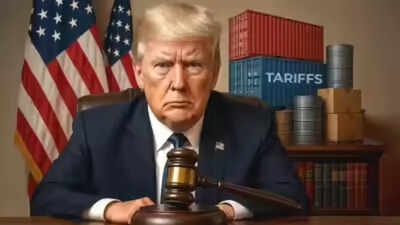
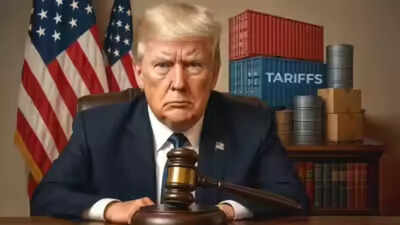
The US Supreme Court on Friday struck down a series of sweeping tariffs imposed by President Donald Trump, ruling that he exceeded his authority under emergency economic powers. However, the decision does not affect several sector-specific duties that remain in place.In a 6-3 ruling, the conservative-majority court held that the International Emergency Economic Powers Act (IEEPA) “does not authorize the President to impose tariffs.” In its judgment, the court said, “The United States, after all, is not at war with every nation in the world. The Government instead relies exclusively on IEEPA. It reads the words ‘regulate’ and ‘importation’ to effect a sweeping delegation of Congress’s power to set tariff policy—authorizing the President to impose tariffs of unlimited amount and duration, on any product from any country.” The bench added that “had Congress intended to convey the distinct and extraordinary power to impose tariffs” through IEEPA, “it would have done so expressly, as it consistently has in other tariff statutes.” Chief Justice John Roberts, delivering the opinion, noted that “IEEPA contains no reference to tariffs or duties.”
Tariffs affected by Friday’s ruling
The ruling centres on Trump’s use of the 1977 IEEPA law, which allows the president to “regulate” trade in response to a declared national emergency.Trump first invoked the law in February 2025 to impose tariffs on goods from China, Mexico and Canada, citing drug trafficking as an emergency. In April, he used the same law to introduce “reciprocal” tariffs ranging from 10% to 50% on imports from nearly all US trading partners, arguing that the US trade deficit posed an “extraordinary and unusual threat.” A lower trade court had ruled in May that Trump overstepped his authority with the across-the-board levies and blocked most of them, though the decision had been paused pending appeal. The Supreme Court’s ruling upholds that earlier decision, effectively invalidating the country-wide tariffs imposed under IEEPA.
Tariffs that remain unaffected
The judgment does not impact industry-specific tariffs imposed under Section 232 of the Trade Expansion Act of 1962, which were justified on national security grounds.These include duties on steel, aluminium, lumber and automotive imports. Several government investigations that could lead to additional sectoral tariffs are still underway.Economists say the ruling could significantly reduce the overall US tariff burden. EY-Parthenon chief economist Gregory Daco had told AFP ahead of the decision that striking down the emergency tariffs would likely lower the average US tariff rate from 16.8% to around 9.5%. However, he cautioned that the relief may be temporary if the administration seeks alternative legal avenues to reimpose broad duties.Financial markets reacted positively to the verdict. The Dow Jones Industrial Average rose 207.03 points, or 0.42%, to 49,602.19, while the S&P 500 gained 33.44 points, or 0.52%, to 6,895.33 shortly after the announcement.