
Bengaluru New Far Norms: Bengaluru to soon witness taller buildings: What higher FAR norms mean for home investors |
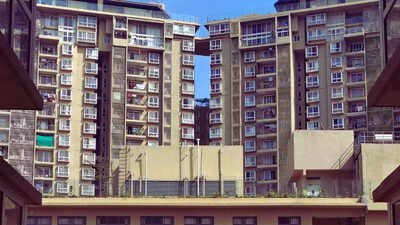
With the recent changes in FAR (Floor Area Ratio) guidelines by the Karnataka government, Bengaluru’s real estate market is to witness taller buildings in the coming years. The Bengaluru skyline will likely see an entirely new shape through the easing of construction regulations, with the Karnataka Industrial Areas Development Board (KIADB) making it possible to purchase a Floor Area Ratio (FAR) of up to 5.2. The city will benefit from increased vertical development to utilize land more efficiently and stimulate economic development along industrial corridors in the outer ring of the city. Floor Area Ratio (FAR) is an important real estate metric parameter based on which it is determined how much maximum total built-up area in a building with all floors combined is allowed on a specific plot of land. FAR norms are important because they regulate urban density, building height, and development intensity. If the FAR ratios are high, it means buildings with denser construction and which are taller. On the other hand, lower ratios are allowed in cities to manage the infrastructure-population ratio.FAR = Total Building Floor Area ————————- Gross Plot AreaHigher Floor Area Ratio (FAR) norms, which are 4.0 or higher, are being adopted to promote vertical growth, redevelopment, and densification near transit hubs. Cities like Delhi, Mumbai, and Noida have increased these limits to maximize land usage, often allowing developers to purchase extra FAR. The real estate market and home buyers will experience a totally different landscape that will change how land, investment, and infrastructure will come together in the next decade due to this change in FAR.
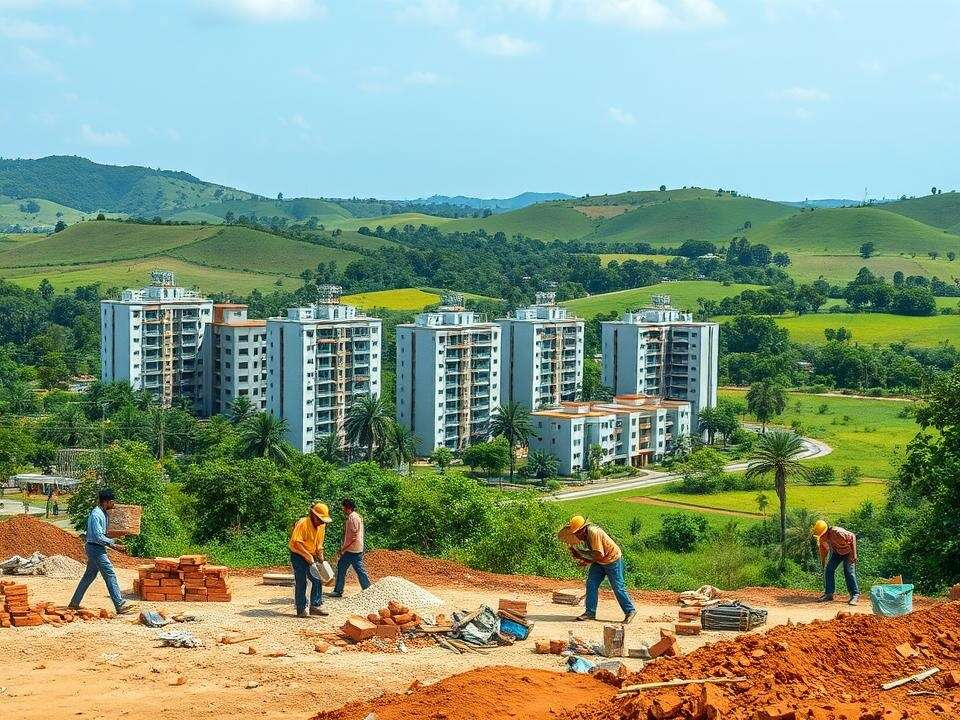
Representative Image
According to Ajay Singh, Senior Director- Sales and Strategy, Jenika Ventures, ” This creates opportunities for this type of industrial development by enabling vertical factories, multi-level storage warehouses, and office parks to be constructed on a smaller footprint, thereby preserving valuable real estate and increasing economic activity in the same geographical location. As a result of the new regulations, land in KIADB-notified regions will be used more rationally, and as land availability becomes increasingly scarce along Bengaluru’s growth corridors, vertical growth of the same type will significantly reduce the need for extensive land acquisition, while at the same time providing even greater opportunities for increasing the economic viability of the growth corridor (or area of development). Notably, the policy aims to encourage the development of integrated townships that incorporate manufacturing facilities, logistics centers, commercial areas, and housing for workers.”For the developer, a higher FAR means better project economics, as it translates into a larger saleable or leasable area on the same land. For the institutional investor, it means better scalability and potential value growth. For the larger ecosystem, it translates into job creation and development-driven growth, which can lead to increased economic activity and improved community infrastructure.Residential market implications“Although the initial impact will be seen in the industrial corridors, the secondary effect may have a bearing on the residential market in the long run. With the rise in employment density and commercial activity in the KIADB (Karnataka Industrial Development Board) sites, it is only a matter of time before there is a greater demand for residential projects in the area. Professionals working in factories, data centers, logistics parks, and office campuses may seek better-designed residential projects in the vicinity of the new industrial hubs. This will also help to reduce the congestion on roads in the Bengaluru city center while further developing the micro-markets in the peripheral areas. This presents an opportunity for the residential real estate investor to take advantage of the projects that are currently being developed around the industrial corridors and their infrastructure,” adds Singh.How this is going to benefit the investorsThe new FAR policy holds significant soaps for real estate investors and homebuyers. Increased land value potential: The increase in permissible built-up areas is going to increase the land valuations.Improved rental opportunities in mixed-use developments: As integrated townships continue to expand, demand for both residential rentals and commercial leasing is expected to rise alongside job creation and economic activity.The ruling of the Karnataka government for allowing FAR up to 5.2 indicates a shift towards vertical growth. This trend is going to lead to vertical and efficient land use. The government is in a position to transform Bengaluru’s peripheral areas into future-ready growth drivers by aligning industrial growth with comprehensive development. Home investors, in particular, will see that the policy is more than just a sign of taller buildings; it is a sign of shifting demand patterns, decentralized employment nodes, and emerging residential growth areas. Research-driven investment choices in these areas can unlock significant long-term value.