Judge blocks deportation of Palestinian activist Mohsen Mahdawi who led Columbia University protests
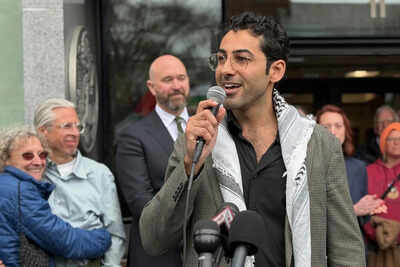
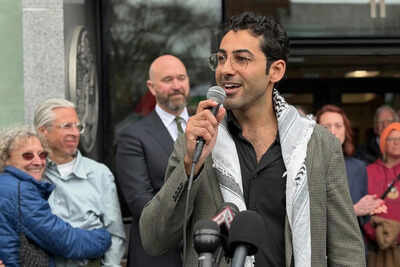
An immigration judge has blocked the deportation of Mohsen Mahdawi, an organizer of the pro-Palestinian movement at Columbia University, ruling that the federal government did not meet the legal threshold required to remove him from the United States.In an order issued last week and made public on Tuesday, Judge Nina Froes said the Department of Homeland Security had not established with clear and convincing evidence that Mahdawi could be deported.Mahdawi had been detained during a citizenship appointment last year as federal authorities expanded their response to student protests linked to the war in the Gaza Strip. Immigration officials sought to rescind his lawful permanent resident status. He was released from federal custody in April.
Court questions government evidence
According to The New York Times, Judge Froes questioned the authenticity of a photocopy of a document presented by the government. The document appeared to bear the signature of US Secretary of State Marco Rubio and argued that Mahdawi’s activism “could undermine the Middle East peace process by reinforcing antisemitic sentiment.”The judge’s order stated that the Department of Homeland Security had not met its burden of proof. It was not immediately clear whether the federal government would appeal the ruling.
Mahdawi cites free speech and due process
Mahdawi, who grew up in a Palestinian refugee camp in the West Bank, said the deportation effort was an attempt to punish him for speaking against USs involvement in the war in Gaza.“This decision is an important step toward upholding what fear tried to destroy: the right to speak for peace and justice,” Mahdawi said in a prepared statement quoted by The New York Times. “Nearly a year ago, I was detained at my citizenship interview not for breaking the law but for speaking against the genocide of Palestinians.”His lawyer, Naz Ahmad, said that the case reflected what she described as a troubling interpretation of the Immigration and Nationality Act. “It’s important for people to fight and not to think that there’s no way to fight this machine,” she said. She added that she hoped the government would “realize that they made a mistake, that they did something wrong, and that they’ll course correct,” The New York Times reports.
From campus protest to immigration court
Mahdawi began his undergraduate studies in computer science more than a decade ago in the West Bank before moving to the US in 2014 after meeting an American woman. Over time, he became a practicing Buddhist and worked with Jewish peace activists on dialogue around the Israeli-Palestinian conflict.He later enrolled at Columbia University, where he became a prominent organizer of pro-Palestinian demonstrations. He stepped away from that role in March 2024, before campus protests escalated into encampments and building occupations.Although he was not accused of a crime at the time of his arrest, Mahdawi spent 16 days in a Vermont prison before a judge ordered his release. The judge allowed him to return to New York to complete his coursework, rejecting the government’s argument that he posed a flight risk.He graduated from Columbia in May with a bachelor’s degree in philosophy, crossing the stage to applause.
What comes next
Immigration court proceedings are typically not open to the public. Mahdawi’s legal team publicized the decision this week. The Department of Homeland Security retains the option to appeal.