‘Special measures in place to ensure safe passage of ships from friendly nations like India’: Iran envoy | India News
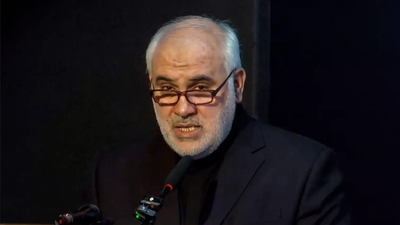
NEW DLEHI: Amid the ongoing conflict, Iran’s ambassador to India, Dr Mohammad Fathali, spoke to TOI on war narratives, the situation at the Strait of Hormuz, and clarified Iran’s maritime approach during wartime. He emphasised that the conflict is an “illegal war” imposed on Iran. Reflecting on his diplomatic tenure, he highlighted public solidarity and deepening bilateral relations, calling India a “true friend in hard times.” Excerpts: Q: Many Indians sent aid to Iran. Tehran thanked India but then deleted some of the tweets. What happened?A: We have received a lot of contributions from all over India—from north to south and east to west. Donations are still coming in. We are truly grateful for the kindness of the Indian people. I want to sincerely thank the Indian govt and people for their valuable support and solidarity. Contrary to what was said in the media, there was no special reason for deleting the tweets. Since these contributions came from people of all religions, ethnicities, and every part of the country, we felt it was necessary to show our appreciation to all the people of India together.Q: The war has also been a battle of narratives. Has the global perception shifted in anyone’s favour?A: Beyond all the rhetoric and contradictory statements, what happened on Feb 28th was an act of aggression and an illegal war imposed on the Iranian nation.We were in the middle of negotiations with the US. This wasn’t the first time the United States walked away from the table while we were negotiating and attacked. For what reason? They claimed there was an ‘immediate threat’ from Iran, but then the Pentagon quickly denied it, saying there was no such threat. They talked about Iran’s nuclear program and nuclear weapons—something that has never existed. Now, everyone knows this is a war based on illusions. It is an illegal war imposed not only on Iran but also on the entire region, with consequences for the whole international community.Our enemies have not achieved any of their goals so far. They were looking for ‘regime change’ in Iran. However, we are a govt that emerged from a popular revolution, and our people have shown their support by taking to the streets since the very first day of the war. We are defending ourselves, and we will spare no effort in this path.Q: The administration in Iran recently praised India for its ‘balanced’ and ‘neutral’ stance. Is there anything Iran expects from New Delhi? A: We appreciate the measures taken by the Indian govt. This approach reflects India’s profound understanding of regional complexities and the significance of maintaining bilateral relations. At the same time, we expect all independent and freedom-loving nations to stand against the violation of international law and aggression. All govts must condemn attacks on civilian infrastructures—such as hospitals, schools, universities, and economic centers—and, most importantly, the killing of innocent civilians, including children.Q: There were inputs of Iran helping Indian vessels through the Strait of Hormuz during heightened tensions. Could you clarify if any specific mechanisms or coordination channels are currently in place to ensure their safe passage? A: Iran has always emphasized the importance of safety and security for shipping in international routes. However, it is important to note that the Strait of Hormuz is not part of international waters; it is within the territorial and internal waters of Iran and Oman. Therefore, protecting the interests of these two countries is the priority in managing the strait, and decisions regarding transit conditions belong to Tehran and Muscat. The strait is only closed to countries at war with Iran. It is natural that during wartime, we will not allow our enemies to pass through our internal waters. The fact that other ships are not traveling is due to the insecurity in the region and extremely high insurance costs. Nevertheless, we have implemented special measures to ensure the safe passage of ships from friendly nations, including India.Q: Is this assistance to Indian vessels being handled on a case-by-case operational basis? What’s the approach?A: Our approach is to guarantee the safe passage of vessels from friendly nations, including India. This policy is based on recognized international maritime laws and regulations, as well as the principles of navigation safety. In practice, this can be managed on a case-by-case and operational basis to ensure necessary coordination according to each vessel’s specific conditions and the real-time situation in the region. We have emphasized that the Strait of Hormuz is closed only to those countries that have been directly or indirectly involved in the aggression against our country.Q: What message would Iran like to convey to the international shipping community on transit through the Strait of Hormuz going forward?A: The Islamic Republic of Iran has always respected the principles of freedom of navigation and maritime safety; however, the effective realization of these principles in the Strait of Hormuz is not possible without due respect for the sovereignty and sovereign rights of Iran as the coastal state. We emphasize that responsibility for any disruption, insecurity, or heightened risk in this vital waterway and its surrounding areas lies directly with the regimes of the United States and Israel. By initiating an unlawful and criminal war against our country, they have placed regional stability and the safety of international shipping under an unprecedented threat, in clear contradiction to the fundamental principles of the United Nations Charter.In light of the above, the lawful and legitimate measures undertaken by Iran have been adopted within the framework of established principles of international law, based on the principles of necessity and proportionality. These measures have been implemented to repel aggression and neutralize the sources of threats, and will continue, in accordance with legal standards, until these objectives are fully achieved and the sources of threat and aggression are eliminated.Any passage through the Strait of Hormuz must be conducted in compliance with the measures adopted by Iran and in coordination with the relevant Iranian authorities.Q: How has your stint as ambassador in India been? What are your biggest takeaways?A: During my time in India, I have seen positive developments in the relations between our two countries. The deep historical and cultural ties have always been a strength in our interactions, and these bonds have grown even stronger over time. The sympathy and solidarity of the Indian people with the people of Iran during these difficult times are truly appreciated and will never be forgotten. We believe that true friends are known in hard times, and our Indian friends have shown their true friendship. We are in close contact with the Indian govt, and during my stay, I have witnessed positive efforts from both sides in various fields.