
Beyond Prompts: How Agentic AI Workflows Are Transforming Business Automation
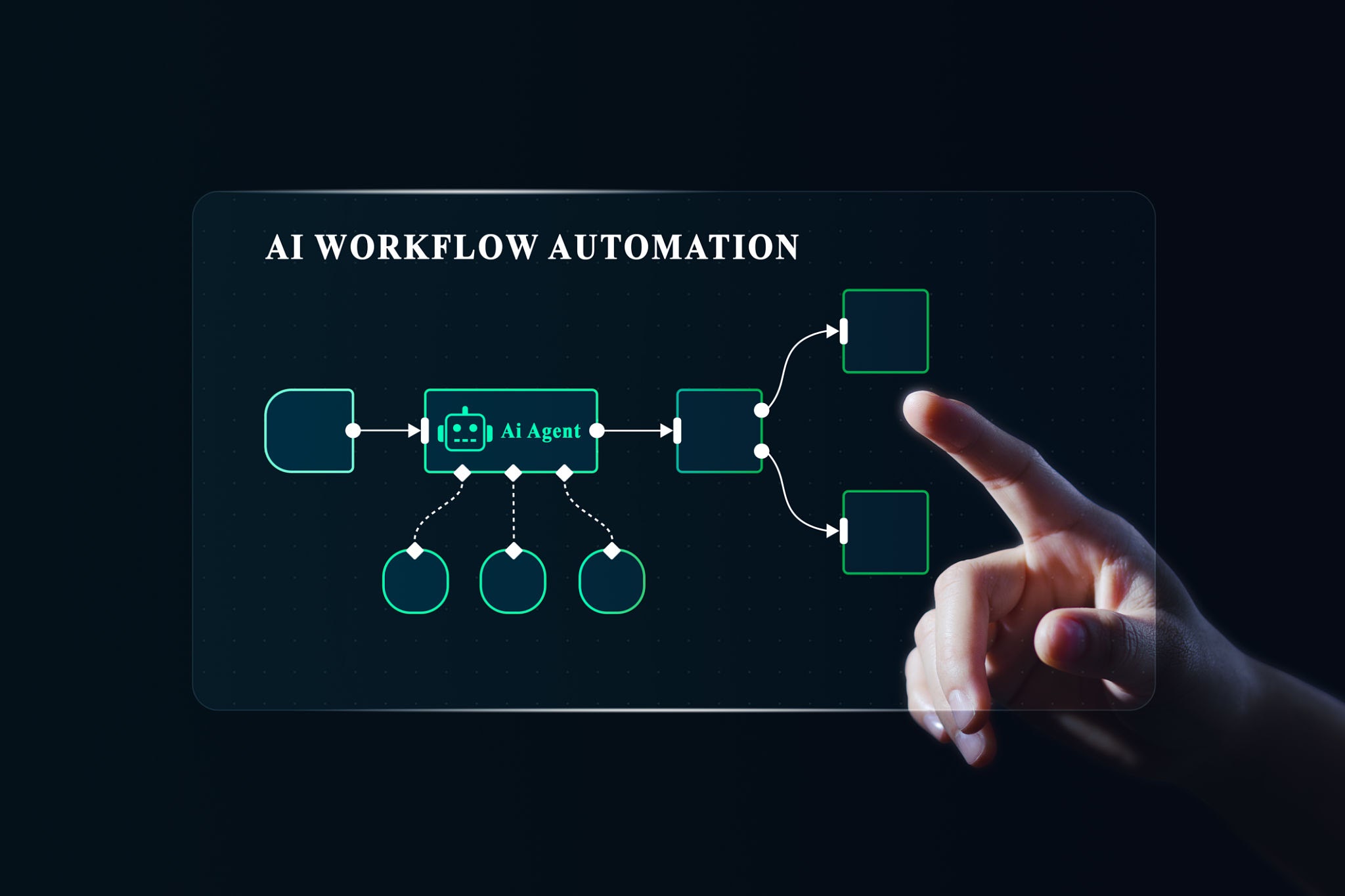 Futuristic interface showing AI workflow automation with digital agent system and human hand interaction, symbolizing artificial intelligence, process optimization, and smart business innovation.
The landscape of artificial intelligence is experiencing a massive operational shift. While initial adoption focused heavily on static content generation, enterprise frameworks are pivoting toward autonomous execution. This evolution introduces agentic ai workflows, a methodology where software systems independently plan, use tools, and correct errors to complete multi-step objectives.
Unlike traditional systems that require continuous human prompting for every single micro-task, autonomous frameworks break a larger goal down into logical sequences.
The Architecture of Autonomy
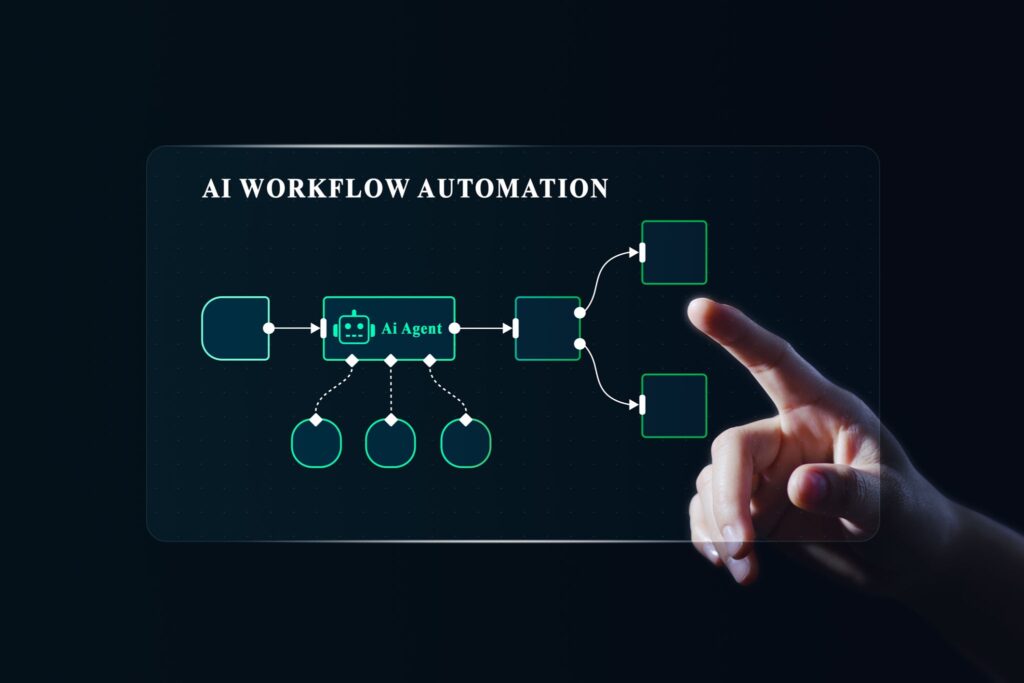
To understand why this model scales effectively, it helps to examine how information flows through a modern autonomous system. A standard deployment relies on four distinct layers working in harmony:
- Goal Definition: The user states an overall objective rather than a sequence of manual commands.
- Planning Phase: The core model calculates the necessary steps, predicting dependencies and data needs.
- Tool Utilization: The system connects with external software tools, databases, and application programming interfaces (APIs) to fetch or push data.
- Self-Correction: If an API returns an error, the system rewrites its strategy without crashing or requiring manual human reset.
This structural setup removes massive bottlenecks in digital operations. Instead of people acting as data routers between different software tools, intelligent systems manage the execution loops independently.
Implementation Priorities for Digital Operations
Transitioning away from legacy automation requires preparing your underlying data layer. Systems must have secure, role-based access to enterprise data silos to make accurate decisions. Starting with clear, bounded parameters—such as automating routine customer service tickets or inventory reconciliation loops—allows teams to monitor decision pathways before scaling the logic across wider customer-facing environments.