Commercial Nuclear Fusion Reactors: 3 Best Ways to Power a Clean Global Grid
 commercial nuclear fusion reactors
Table of Contents
- The Physics of Magnetic Confinement Fusion
- Key Structural Elements of a Commercial Power Station
- High-Temperature Superconductors
- Advanced Thermal Blankets
- Seawater Deuterium Fuel Systems
- Conclusion: Transitioning to Sustainable Energy
Commercial nuclear fusion reactors are the ultimate answer to our planet’s growing energy needs. Today, we need more electricity than ever, but we also need to stop using dirty fossil fuels that hurt our atmosphere. Traditional coal and gas plants release tons of carbon emissions, which damage our climate. At the same time, solar panels and wind turbines only work when the sun is shining or the wind is blowing. To build a truly reliable power grid, we need a clean energy source that never stops. That is why scientists are working hard to build new facilities that can generate unlimited, clean electricity every single day.
Building these plants is one of the greatest scientific goals in human history. It will give our cities a safe, constant source of power that takes up very little space.
The Physics of Magnetic Confinement Fusion
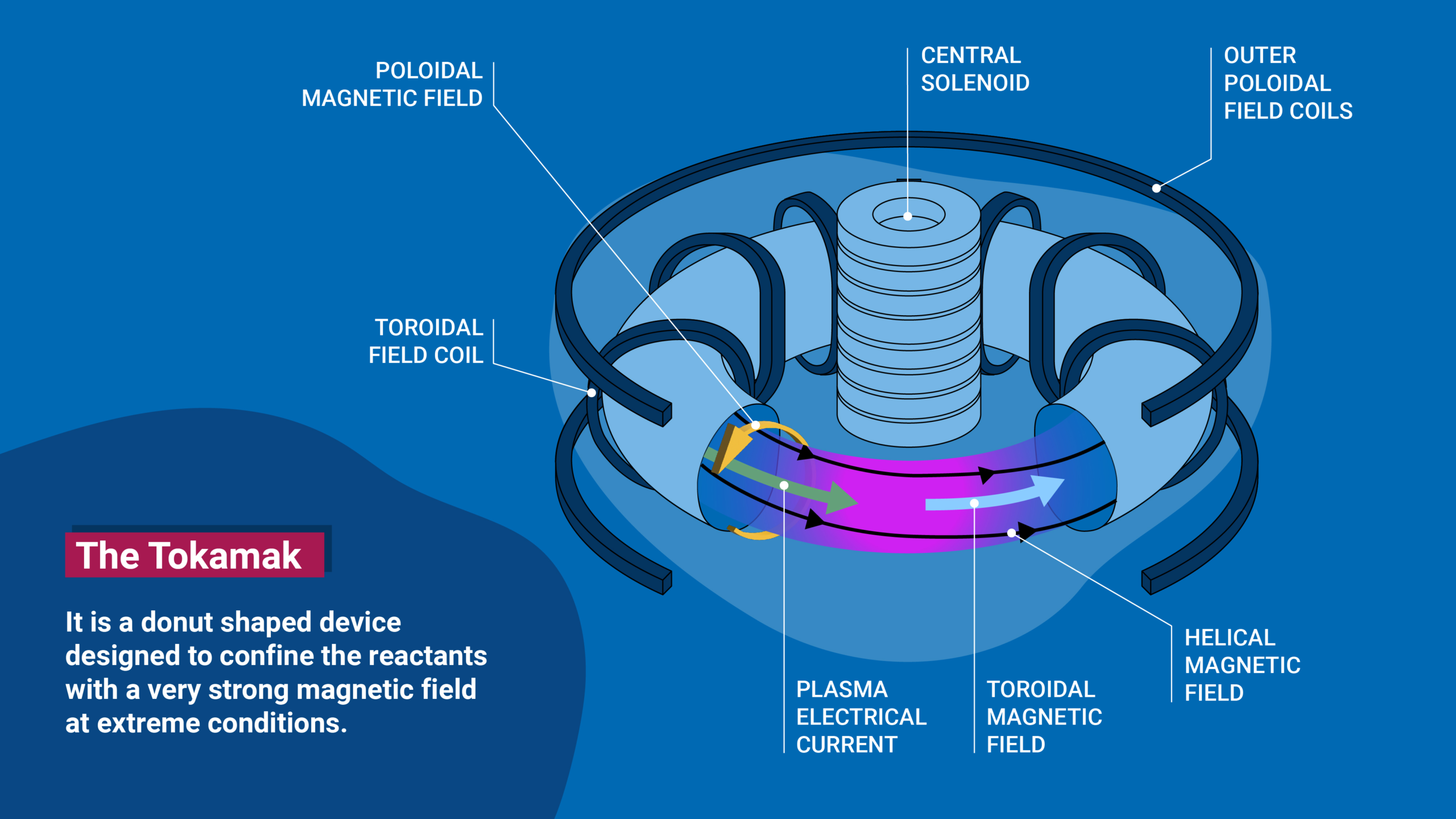
To understand why fusion is so amazing, we can look at how our sun makes energy. Fusion happens when tiny hydrogen atoms are squeezed together under intense heat and pressure. This squeeze fuses them together, releasing a massive amount of clean heat. Because Earth does not have the sun’s natural gravity, we have to make our machines much hotter than the sun itself to get the same result. To hold this super-hot gas, engineers build giant, donut-shaped vacuum chambers called Tokamaks.
Inside these chambers, the hydrogen gas is heated until it turns into a glowing, swirling soup called plasma. To keep this hot plasma from touching and melting the walls of the machine, we use incredibly strong magnets. These magnets create an invisible force field that floats the plasma safely in mid-air. Keeping this hot plasma stable is the main goal of modern commercial nuclear fusion reactors research. You can read more about how this connects to local power networks in our Guide to Future City Grids.
Key Structural Elements of a Commercial Power Station
Turning this complex science experiment into a real power plant that sends electricity to your home requires very strong, advanced parts. Engineers focus on three main building blocks when designing commercial nuclear fusion reactors for public use.
1. High-Temperature Superconductors
First, older fusion machines used normal copper magnets that used up too much electricity just to turn on. This meant the machine used more power than it made! Modern designs use high-temperature superconducting (HTS) magnets. These new magnets are made from special materials that create much stronger force fields while using very little energy. This allows us to build smaller, cheaper reactors that easily generate more power than they consume.
2. Advanced Thermal Blankets
Second, the energy made during fusion shoots out as tiny, fast-moving particles called neutrons. To catch this energy, the inside of the machine is lined with special heat-absorbing walls called thermal blankets. These walls absorb the fast-moving particles and turn their speed into raw heat. Next, water pipes carry this heat away to spin a normal steam turbine, which makes electricity. To see how these test reactors are being built today, you can check out the official ITER Fusion Project website (External DoFollow Link).
3. Seawater Deuterium Fuel Systems
Third, unlike old nuclear plants that need rare and dangerous uranium, fusion plants run on simple hydrogen found in everyday water. The main fuel is called deuterium, and we can easily get it from seawater. This means we have enough fuel on Earth to power our planet for millions of years. Even better, the machine creates its own secondary fuel inside the chamber, making it a self-sustaining loop.
Once these power plants are connected to our cities, the way we buy and use electricity will change forever. We can power giant industrial cities using small plants that are completely safe. Plus, since there is absolutely no risk of dangerous melt-downs, we can build these clean power plants close to where people live.
Conclusion: Transitioning to Sustainable Energy
As commercial nuclear fusion reactors begin connecting to our electricity grids, the world will enter a new age of clean power. By mastering the exact same forces that light up the stars in the night sky, humanity will secure a safe, clean, and infinite energy source for generations to come.