How Israel deployed Iron Dome to UAE amid Iran war – Explained
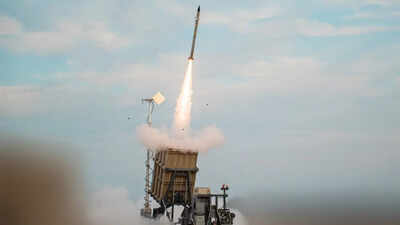
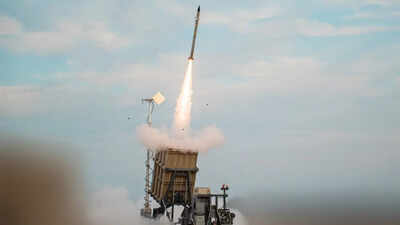
The ongoing war with Iran has pushed regional military cooperation to unprecedented levels, with Israel quietly deploying its advanced air defence system, the Iron Dome to the United Arab Emirates (UAE).The move marks the first time Israel has operationally deployed the system in another country beyond its own territory and limited use by the United States, highlighting a major shift in defence ties in West Asia, according to Axios.
Why Israel sent Iron Dome to the UAE?
The deployment came as the UAE faced sustained attacks from Iran during the war. According to Emirati defence officials, the country was among the most heavily targeted in the region.Iran reportedly launched around 550 ballistic and cruise missiles and more than 2,200 drones at the UAE. While most were intercepted, several struck military and civilian sites.Behind the scenes, Israeli Prime Minister Benjamin Netanyahu ordered the deployment after a call with UAE President Mohammed bin Zayed Al Nahyan.Israeli officials said the system, along with several dozen Israeli Defence Forces (IDF) personnel, was sent to help defend critical infrastructure.“That was the first time Israel had sent an Iron Dome battery to another country, and the UAE was the first country outside of the U.S. and Israel in which the system was used,” a senior Israeli official said.The deployed system reportedly intercepted dozens of incoming Iranian missiles.
What is the Iron Dome system?
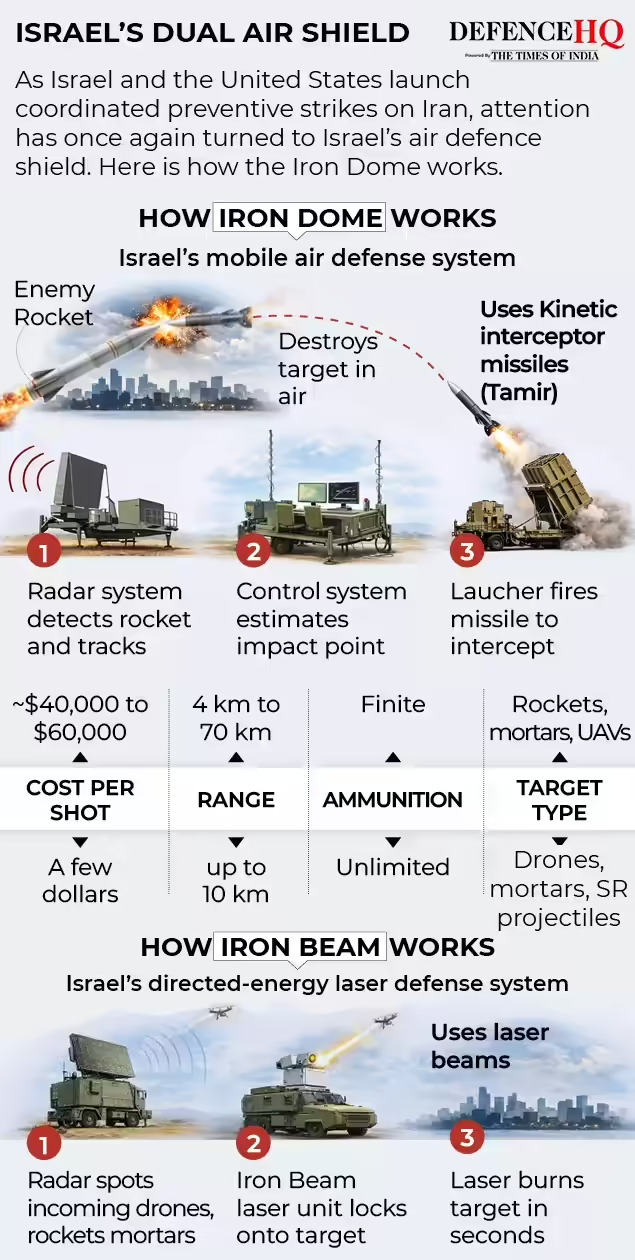
The Iron Dome is one of the world’s most widely deployed and battle-tested air defence systems. It was primarily developed by Israeli defense companies Rafael Advanced Defense Systems and Israel Aerospace Industries (IAI), with development starting around 2007 and deployment beginning in 2011. The system was designed to combat short-range rocket threats and is supported by US funding.It has intercepted over 5,000 projectiles since becoming operational in 2011, according to Rafael USA. It has a success rate of over 90% and is designed to counter rockets, drones, cruise missiles, artillery and mortars.
.
The system uses radar to detect incoming threats and calculate their trajectory. It then determines whether the projectile is likely to hit a populated or strategic area.If a threat is deemed dangerous, the system launches a Tamir interceptor missile, which destroys the incoming target mid-air.A key feature is its selective interception capability, it only targets threats that pose a real danger, reducing costs and conserving interceptors.
Key capabilities of Iron Dome:
- Multi-layer defence: Can operate independently or as part of a wider air defence network
- 24/7 operation: Works in all weather conditions, including dust storms and low visibility
- 360-degree coverage: Protects against threats from multiple directions
- Simultaneous targeting: Can handle multiple incoming threats in high-density attacks
- Mobility: The I-Dome variant can be quickly deployed to protect moving forces and strategic assets
War-time coordination between Israel and UAE
The deployment also reflects growing military cooperation between Israel and the UAE since the signing of the Abraham Accords in 2020.Since the start of the war, both countries have worked closely on security and intelligence coordination.Israeli officials said the Israeli Air Force also carried out strikes in southern Iran to neutralise short-range missile threats targeting Gulf countries, including the UAE.The presence of Israeli troops on UAE soil is politically sensitive in the Gulf region. However, officials indicated that the scale of Iranian attacks has shifted public perception.One Emirati official said that anyone helping defend the country during such attacks would be viewed positively.At the same time, the decision drew scrutiny within Israel, as the system was shared while Israel itself was under heavy fire.The UAE also received support from multiple allies during the conflict, including the United States, France, the United Kingdom, Italy and Australia, AFP reported. Tareq al-Otaiba, a former UAE national security official, highlighted the role of key partners.“Primarily, the United States and Israel have proved to be true allies by offering support through extensive military aid, intelligence sharing, and diplomatic backing,” he wrote, Axios reported. A senior Emirati official added: “We are not going to forget it.”Another official described the moment as a turning point: “It was a real eye-opening moment. To see who our real friends are.”
The bigger picture
The deployment of the Iron Dome in the UAE signals a major evolution in regional defence dynamics.It not only underscores the growing alignment between Israel and Gulf nations against common threats, but also sets a precedent for future military cooperation: including the potential sharing of advanced defence technologies across borders.