Microgrid Solar Energy Storage: 3 Best Ways to Save Power and Stop Blackouts Today
 Microgrid Solar Energy Storage
Table of Contents
- Why Central Power Lines Fail During Severe Storms
- 3 Core Components of Independent Power Systems
- Neighborhood Solar Panel Arrays
- High-Capacity Local Battery Banks
- Intelligent Automatic Transfer Switches
- Conclusion: Building Resilient Communities with Local Solar
Microgrid solar energy storage is giving local neighborhoods, hospitals, and rural towns total independence from fragile main power lines. Traditional electrical grids rely on huge central power plants that send electricity through hundreds of miles of high-voltage wire. When severe weather, fallen trees, or equipment failures break a single central line, thousands of homes instantly lose electricity for days. To stop widespread blackouts, local communities are building self-contained power networks that combine rooftop solar panels with high-capacity local battery storage.
These small, localized energy networks can disconnect from the main electrical grid during emergencies, keeping neighborhood lights, refrigerators, and medical equipment running without interruption.
Why Central Power Lines Fail During Severe Storms
Imagine a city where all drinking water comes from one central pipe located fifty miles away. If a construction crew accidentally breaks that single main pipe, the entire city goes thirsty.
That is why microgrid solar energy storage is a game-changer. Instead of relying entirely on one distant power plant, every neighborhood generates and stores its own clean energy locally.
Installing a local solar battery system provides big advantages for families and business owners:
- Uninterrupted Power Supply: Keep lights, air conditioners, and medical devices running during storm blackouts.
- Lower Monthly Energy Bills: Store cheap solar power during daytime hours and use it at night to avoid high grid rates.
- Zero Carbon Emissions: Replace dirty gas generators with clean, quiet solar electricity.
Taking control of local electricity supply protects communities against extreme weather events. Learn more about clean energy setups in our Internal Link: Master Guide to Home Solar Systems.
3 Core Components of Independent Power Systems
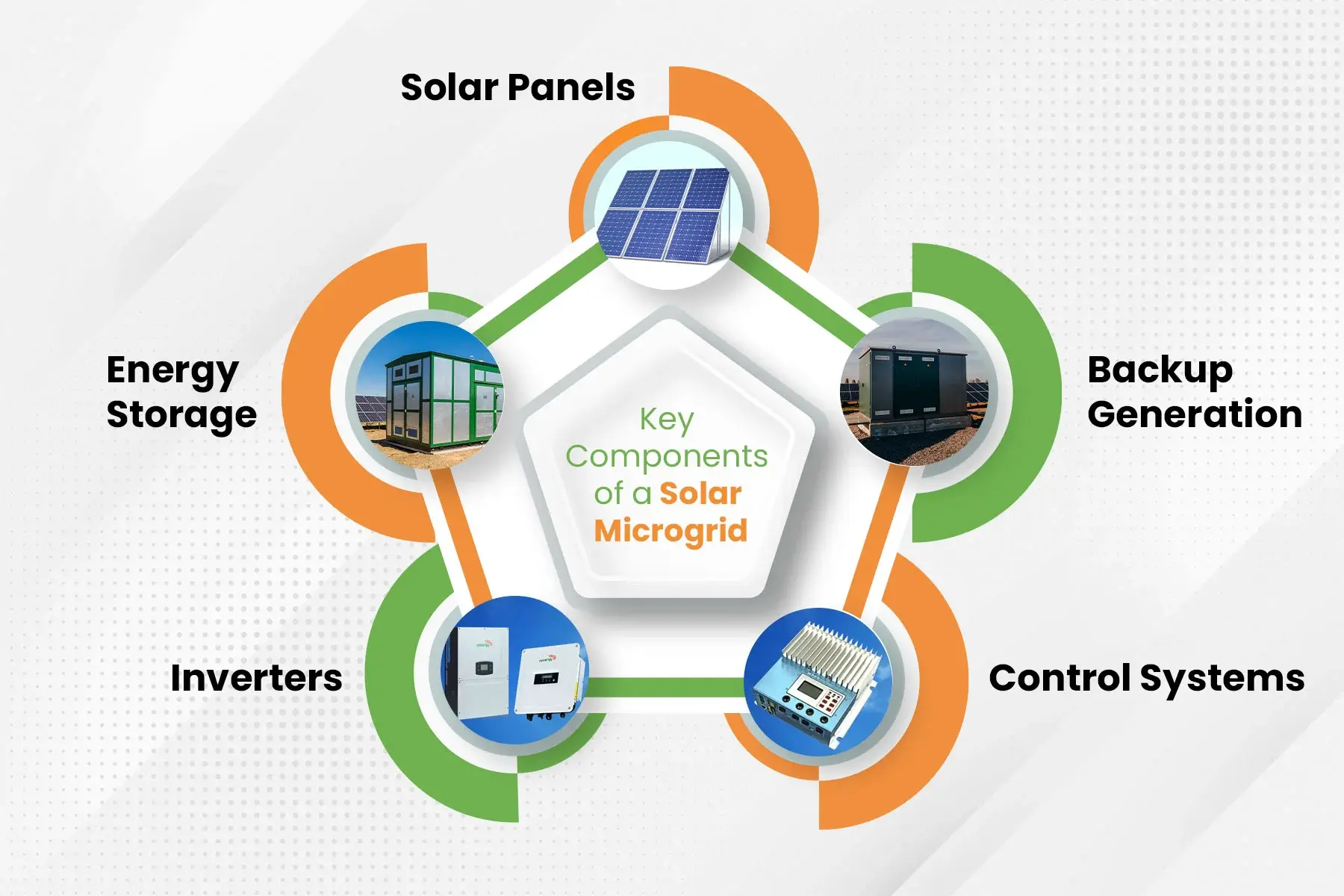
Building a reliable neighborhood power network requires combining generation, storage, and smart switching technology. Engineers focus on three major structural parts when setting up microgrid solar energy storage.
1. Neighborhood Solar Panel Arrays
First, solar panels mounted on rooftops and open ground collect clean sunlight during daylight hours, converting solar rays directly into usable electrical power for local homes.
2. High-Capacity Local Battery Banks
Second, large lithium or solid-state battery banks store excess power generated during sunny afternoons. This stored energy powers local homes through the night or during dark winter storms. To explore official clean power guidelines, visit the SEIA Solar Energy Industries Association resource hub (External DoFollow Link).
3. Intelligent Automatic Transfer Switches
Third, smart digital switches monitor the health of the main city grid continuously. If a storm knocks out central power lines, the switch disconnects the neighborhood automatically in milliseconds, switching over to local battery power without even a light flicker.
Deploying independent solar storage ensures essential local services remain operational during emergencies.
Conclusion: Building Resilient Communities with Local Solar
Relying on fragile, long-distance power grids leaves modern towns vulnerable to severe weather disruptions. Generating and storing solar energy locally guarantees uninterrupted power for homes and emergency services. Ultimately, investing in microgrid solar energy storage is the best way to secure clean, reliable electricity for your community.