
New Smartphone Launches: Extreme Battery Capacities and Advanced Cooling Systems Transform Mobility
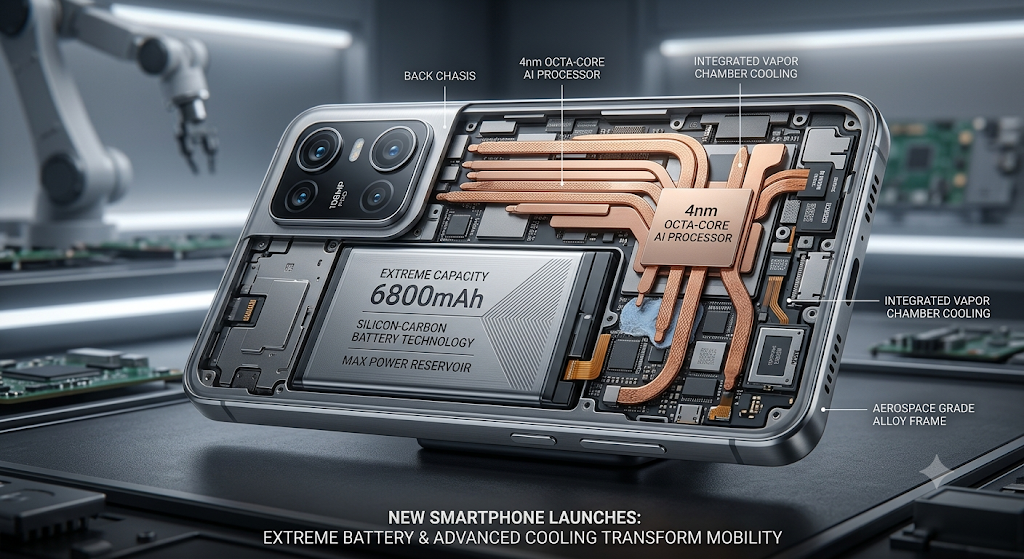
The international mobile hardware market is moving through an incredibly intense deployment phase this season. Because data-heavy streaming apps require continuous power, product engineering teams are completely transforming battery setups. Specifically, global tech brands are moving away from traditional, low-capacity cell designs. Instead, they are rolling out cutting-edge power structures that keep devices running for multiple days comfortably. Consequently, tracking these massive battery breakthroughs sits right at the Top of the priority list for any power user. Reviewing these new smartphone launches helps active professionals identify highly durable devices before retail stores adjust their seasonal inventory.
In this comprehensive hardware review, we analyze the newest long-endurance smartphone entering the consumer tech space. Furthermore, we break down how these massive power reservoirs maintain cool operating temperatures under intense daily usage. If you want to compare these newly announced devices with previous mobile models, you can explore our detailed [suspicious link removed] for complete structural context. Thus, let us review the primary internal advancements leading the consumer tech market this week.
The OnePlus N6: Colossal 8,000mAh Power Cells Meet 45W SuperVOOC Rapid Charging
The most prominent engineering milestone discussed across recent waves of new smartphone launches centers on OnePlus’s latest power-focused handset. The brand has officially announced the upcoming release of its highly anticipated OnePlus N6 smartphone. This unique device targets mobile gamers, delivery workers, and outdoor travelers who require multiple days of heavy operational usage without looking for a wall outlet.
In the Middle of engineering this endurance-centric smartphone, development teams focused heavily on expanding battery capacity without creating an awkward, bulky chassis. They successfully achieved this goal by implementing a massive 8,000mAh silicon-carbon composite battery cell. Consequently, everyday users can expect up to three full days of standard connectivity on a single charge cycle.
The standout technical milestones built into this new phone include:
- 45W SuperVOOC Fast Charge: An ultra-safe rapid charging architecture provides hours of active YouTube streaming from just a five-minute emergency plug-in.
- Massive 5,300mm² Vapor Chamber: The segment’s largest cooling plate dissipates internal heat quickly during intense gaming sessions.
- 120Hz Fluid Refresh Screen: A highly responsive display module delivers steady-flowing smoothness across everyday user interfaces.
Additionally, the phone ships with an AI-enhanced 50MP main camera capable of recording smooth video clips at sixty frames per second. For exact regional availability metrics and countdown notification details, you can visit the official OnePlus India Hub. The smartphone is scheduled to go on sale early next month across all major retail networks.
Endurance Metrics: Comparing Ultra-Capacity Battery Implementations
While packing massive battery capacities inside slim frames provides incredible convenience, managing internal heat production remains essential for hardware safety. To protect device lifecycles, manufacturing teams are incorporating oversized liquid cooling layers alongside smart power management software.
A side-by-side performance review highlights exactly why hardware designers are integrating massive cooling plates alongside high-density batteries:
| Smartphone Performance Metric | Legacy Mid-Tier Devices | Next-Gen OnePlus N6 Layout |
| Battery Cell Total Capacity | Standard 5,000mAh Power Units | Colossal 8,000mAh Silicon-Carbon Cells |
| Vapor Chamber Cooling Area | Basic 2,500mm² Thermal Dissipators | Segment-Leading 5,300mm² Cooling Plates |
| Rapid Power Input Velocity | Traditional 18W Charging Baselines | Advanced 45W SuperVOOC Charging Rigs |
| System Interface Fluidity | Standard 60Hz Refresh Rate Panels | Fluid 120Hz Responsive Refresh Modules |
According to independent technology laboratory testing data, utilizing these expanded cooling elements prevents internal thermal throttling completely. This structural progress ensures that the device can run demanding multiplayer games at high frame rates for extended periods safely. Consequently, mobile users can enjoy maximum processing power while maintaining long-term battery health metrics over a seven-year usage cycle.
Ecosystem Synergy: Designing Fluid Multi-Device Media Networks
To ensure that digital creators benefit fully from these new smartphone launches, operating system developers are building shared network ecosystems. For instance, modern studio environments are utilizing highly responsive wireless channels. These pathways allow long-endurance smartphones, portable action cameras, and laptops to interact with zero configuration lag.
Major media groups have started deploying unified software platforms. These systems sync device battery metrics and media folders across surrounding hardware setups automatically. By tracking local device positions in real time, these platforms allow an editor to move an active video timeline from a smartphone to a main laptop terminal instantly. Thus, rendering work continues without manual file conversions.
Simultaneously, manufacturing facilities are incorporating smart automated sharing protocols. Under this setup, primary computers optimize the data processing pathways of surrounding mobile devices. Therefore, this dynamic load balancing allows lightweight smartphones to execute intense media edits locally by drawing on the computational strength of a nearby main workstation.
Final Conclusion: Embracing Uncompromised Power in Modern Mobile Design
As we bring this extensive consumer hardware review to a Bottom, the overall developmental trajectory of the mobile tech market is completely unmistakable. The continuous arrival of new smartphone launches demonstrates clearly that real daily utility relies on a balanced relationship between massive power reservoirs and smart thermal engineering.
Whether your personal setup is built around multi-device software networks or high-capacity travel tools, picking components that sync together smoothly is highly beneficial. If you want to check how these modern power cells compare with older battery designs, be sure to read our detailed [suspicious link removed]. Ultimately, investing in a secure, long-endurance mobile platform will keep your daily workflows moving at maximum speeds in this highly connected era!