
Tapping the Deep Blue: Generating Constant Power via Ocean Thermal Energy Conversion Systems
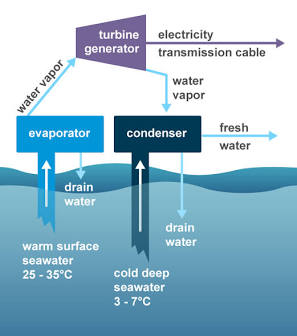
The global shift toward green electricity requires power sources that operate reliably around the clock. Traditional renewable systems like solar arrays and wind turbines are expanding quickly worldwide. However, these systems face a natural drawback because they depend entirely on changing weather conditions. When the wind stops blowing or clouds block the sun, power generation drops instantly. To ensure a steady supply of clean power, maritime engineers are looking to the world’s oceans. Specifically, they are deploying ocean thermal energy conversion systems to harvest the massive amounts of solar heat stored in tropical waters.
This specialized technology utilizes natural temperature differences between the surface and the deep sea to drive clean power turbines.
Explaining the Internal Fluid Dynamics of Marine Power Plants
The mechanical process behind marine thermal generation relies on a simple principle of thermodynamics. In tropical ocean regions, the sun heats the surface water to temperatures above twenty-five degrees Celsius. Meanwhile, deep ocean water miles below the surface stays near a freezing five degrees Celsius.
Marine power plants exploit this permanent temperature gap using a continuous closed-loop fluid cycle.
[ Warm Surface Water (25°C+) ] ──► [ Evaporator: Boils Low-Boiling Fluid ]
                                                    │
                                                    ▼
[ Deep Cold Water (5°C) ]     ◄── [ Condenser: Liquefies Vapor ] ◄── [ Drives Turbine Generator ]
Consequently, the warm surface water heats a specialized working fluid with a very low boiling point, such as ammonia. As the fluid boils, it expands rapidly into a high-pressure gas. This rushing gas moves down a sealed pipe to spin a large turbine generator, creating clean electricity. Immediately after this step, the system pumps freezing water up from the deep ocean floor to cool the gas back into a liquid. Therefore, the continuous cycle generates constant power entirely independent of daily weather changes.
Core Strategic Upgrades for Marine Energy Networks
Deploying these massive maritime power plants requires solving complex marine engineering challenges. Development teams focus on three essential areas to ensure long-term operational success:
1. Building Ultra-Long Deepwater Intake Pipes
The biggest physical challenge in marine thermal engineering is pulling massive amounts of freezing water up from the deep ocean floor. This task requires building incredibly long intake pipes that stretch over a kilometer straight down into the sea. Engineers build these massive conduits using flexible, lightweight composite plastics. Consequently, the flexible material moves safely with strong deep-sea currents without cracking or breaking apart under immense underwater pressure.
2. Implementing Advanced Anti-Biofouling Coatings
Because these offshore facilities process millions of gallons of seawater every single hour, marine life poses a constant operational challenge. Algae and barnacles quickly grow inside warm internal pipes, blocking water flow and lowering system efficiency. Therefore, engineers coat all internal plumbing surfaces with specialized non-toxic, slick polymer seals. This protective coating prevents marine organisms from sticking to the pipes, ensuring smooth fluid movement without harming the local ecosystem.
3. Scaling Co-Generation Fresh Water Infrastructure
A fantastic secondary benefit of ocean thermal systems is their ability to produce fresh drinking water as a natural byproduct. Open-cycle configurations flash-boil warm seawater inside a vacuum chamber to create pure desalinated water vapor. After this vapor spins the power turbine, cold deep-sea water cools it down into clean drinking water. Therefore, a single marine facility can supply both clean electricity and fresh water to isolated coastal communities simultaneously.
Securing Long-Term Coastal Energy Independence
As manufacturing costs drop and marine construction methods improve, ocean thermal systems will become a vital tool for coastal communities. Island nations can finally replace expensive, polluting diesel generators with a clean power source that runs continuously.
Furthermore, the dual production of fresh water solves two major environmental crises at the exact same time. By tapping into the permanent thermal storage of our oceans, this technology provides a reliable foundation for worldwide clean energy independence.