
Powering the Next Leap: Automating Solid State Battery Production Lines for Electric Vehicles
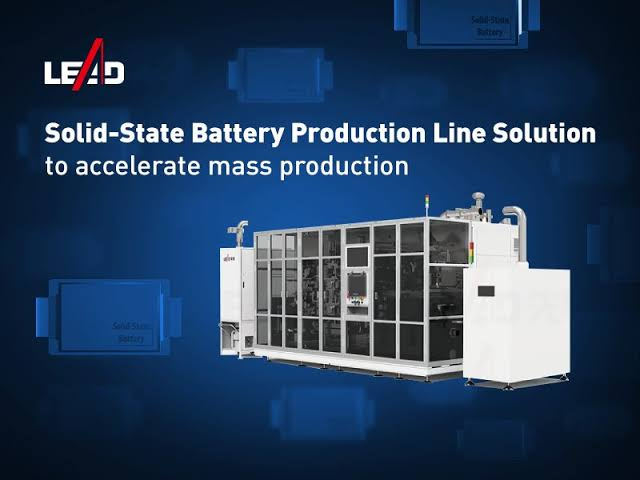
The global automotive market is pushing hard for a major battery breakthrough. For many years, electric vehicles relied completely on standard lithium-ion packs. These older systems use liquid electrolytes to move electrical energy back and forth. However, liquid packs face clear physical limits. They charge slowly and carry noticeable fire risks under extreme heat conditions. Therefore, modern automotive manufacturers are shifting their research attention toward a superior alternative. Specifically, they are developing solid state battery production lines to scale up next-generation vehicle energy storage.
By replacing volatile liquid components with solid ceramic or polymer layers, developers unlock incredible energy densities.
Understanding the Mechanics of Solid Energy Assembly
To appreciate why this shift requires entirely new factory setups, we must look at internal cell physics. Liquid batteries are relatively easy to manufacture because factories pour liquid electrolytes into pre-sealed cells. The liquid naturally fills every microscopic gap inside the casing. However, solid-state designs present a much tougher engineering challenge. Manufacturers must press solid separator sheets tightly against solid metal electrodes.
Consequently, any microscopic gap or uneven pressure point will ruin the cell’s energy flow entirely.
Therefore, automated systems must maintain extreme precision during assembly. The production machinery applies massive, uniform mechanical pressure across every individual layer. This step ensures continuous contact throughout the battery’s entire operational life. Furthermore, specialized rollers prevent the formation of tiny metallic spikes called dendrites. Because these spikes can piece internal layers and cause short circuits, avoiding them preserves battery safety. As a result, the final product delivers double the driving range of old battery packs while remaining completely stable.
Overcoming the Microscopic Bottlenecks of Factory Scale
Scaling up these specialized production facilities requires a total redesign of backend factory environments. Production engineers must implement distinct operational upgrades to achieve high daily output:
1. Integrating Hyper-Dry Room Atmospheres
Solid-state battery materials are incredibly sensitive to ambient moisture. If even a tiny amount of humidity enters the work area, chemical reactions will ruin the raw materials instantly. Therefore, factories must build specialized hyper-dry rooms. Advanced climate control units keep ambient humidity levels below one percent. Consequently, this dry air environment protects material purity from the initial mixing stage down to final product sealing.
2. Upgrading to High-Speed Roll-to-Roll Processing
Old assembly methods are simply too slow for mass automotive production. Therefore, modern lines utilize high-speed roll-to-roll processing systems. Massive automated machines pull ultra-thin sheets of solid ceramic separator material through chemical coating baths at high speeds. Then, robotic arms slice the coated sheets into precise shapes with laser cutters. This continuous workflow increases factory output speeds significantly while lowering total manufacturing costs per kilowatt-hour.
3. Deploying Continuous Acoustic Inspection Systems
Because visual cameras cannot look inside a solid metal battery casing, factories use advanced quality control methods. Automated inspection stations send ultrasonic sound waves through every finished cell. If a wave hits an internal air bubble or a loose layer, the software flags the defect instantly. Thus, this continuous acoustic testing ensures that only perfect battery packs reach the vehicle assembly floor.
Driving the Long-Term Future of Clean Transportation
As these automated manufacturing facilities scale up, the cost of building long-range electric vehicles will drop rapidly. Drivers will soon enjoy cars that recharge completely in under ten minutes. Furthermore, these vehicles will travel over eight hundred kilometers on a single charge.
By eliminating driving-range anxiety and charging delays, this technology makes clean transportation practical for everyone. Ultimately, building efficient solid-state manufacturing hubs allows the global automotive industry to abandon fossil fuels permanently.